
Department of Medical Gastroenterology
The Department of Medical Gastroenterology provides comprehensive, evidence-based care for disorders of the esophagus, stomach, small and large intestine, liver, biliary tract, and pancreas, integrating outpatient, inpatient, emergency, and intensive care services within a unified care pathway for adults and adolescents. The department’s mission is to deliver timely diagnosis, advanced endoscopic therapy, multidisciplinary hepatobiliary and pancreatic care, and longitudinal follow-up, supported by structured teaching, simulationbased training, and clinical research to continually improve outcomes and patient experience.
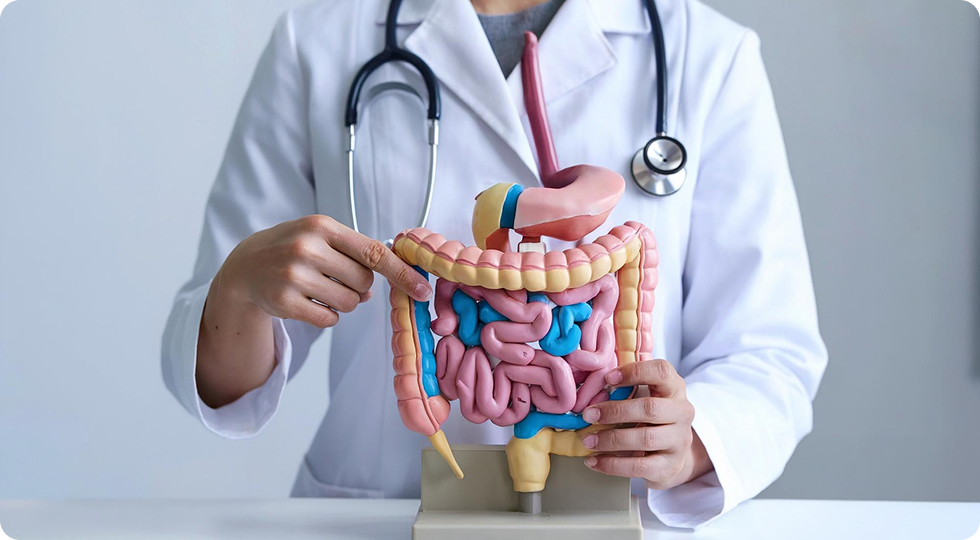
Clinical services are organized around high-volume endoscopy suites, dedicated GI wards, and close collaboration with anesthesia, radiology, surgical gastroenterology, oncology, and critical care to ensure seamless transitions of care for complex digestive diseases. Patient-centric processes emphasize standardized triage, enhanced recovery protocols, antimicrobial stewardship, and rigorous quality and safety auditing, with regular morbidity–mortality reviews and data-driven practice updates.
Diagnostic and Therapeutic Capabilities
Upper GI endoscopy (diagnostic & therapeutic)
Variceal band ligation, sclerotherapy, hemostasis for peptic bleeding, polypectomy, balloon/bougie dilatation for strictures, foreign body removal, and esophageal/ enteral stenting.
Lower GI endoscopy
Flexible sigmoidoscopy and colonoscopy with biopsies, polypectomy, endoscopic mucosal resection where indicated, and endoscopic hemostasis for lower GI bleeding.
Biliopancreatic endoscopy
ERCP for choledocholithiasis, benign and malignant biliary strictures (sphincterotomy, stone extraction, plastic/metal stent placement), and selected pancreatic duct interventions.
Advanced diagnostics
Capsule endoscopy for small-bowel evaluation, high-resolution esophageal and anorectal manometry, and ambulatory 24-hour pH–impedance testing through dedicated motility and functional GI labs and an endoscopy simulation unit for training and QA.
Nutrition and supportive care
Enteral access including nasojejunal tube placement and percutaneous endoscopic gastrostomy, with individualized nutrition support plans for malabsorption, IBD, and chronic liver disease
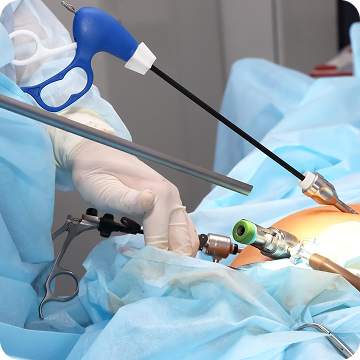
Availability of Laparoscopic and Minimally Invasive Procedures
The hospital provides a full spectrum of laparoscopic and minimally invasive procedures in collaboration with Surgical Gastroenterology and allied surgical services, ensuring rapid access from endoscopic diagnosis to definitive operative management where indicated. Available procedures include laparoscopic cholecystectomy, appendectomy, and hernia repairs; laparoscopic hiatal hernia repair and anti reflux surgery; laparoscopic management of achalasia; minimally invasive procedures for benign anorectal disease; diagnostic laparoscopy; and general GI laparoscopy aligned to contemporary ERAS pathways. Multidisciplinary HPB pathways enable combined endoscopic–laparoscopic strategies (e.g., preoperative biliary drainage by ERCP followed by laparoscopic or open oncologic resections as appropriate), with case selection discussed in tumor boards and complex case conferences.