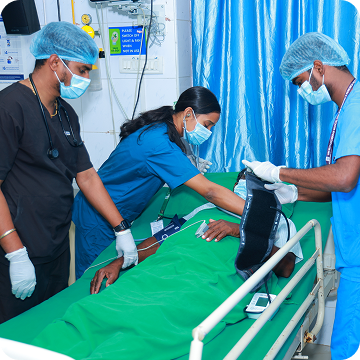
Department of Emergency and Trauma Care
The Department of Emergency and Trauma Care serves as the pivotal unit for acute medical and surgical management, providing immediate care to critically ill and injured patients around the clock. The department operates 24 hours a day under the skilled direction of trained emergency physicians, supported by anesthesiologists, surgeons, orthopedic specialists, physicians, thoracic medicine consultants, and a dedicated team of emergency nurses and paramedics.
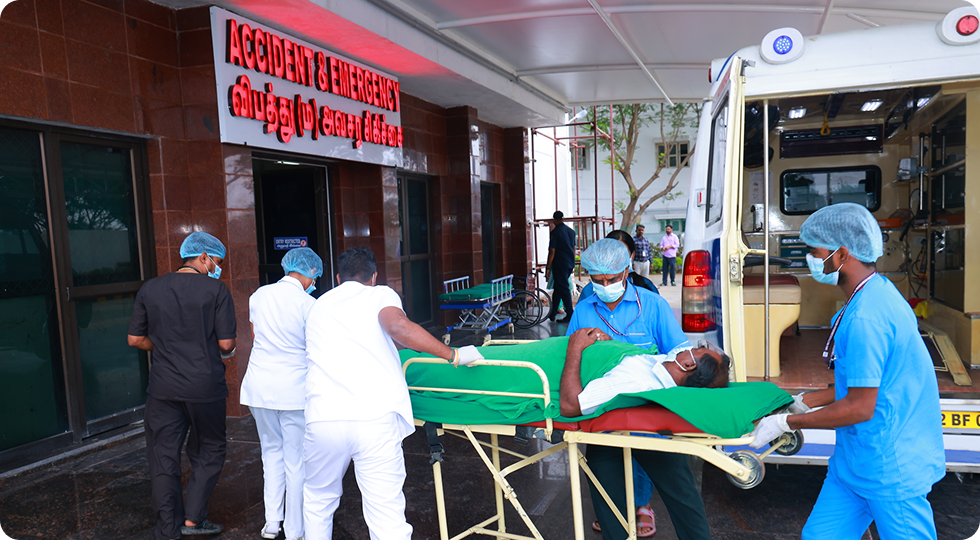
With state-of-the-art infrastructure and advanced monitoring systems, the department ensures rapid assessment, resuscitation, stabilization, and management of patients presenting with life-threatening conditions. The trauma care division is fully prepared to handle all forms of blunt and penetrating injuries, road traffic accidents, industrial trauma, and polytrauma cases through a systematic, evidence-based approach.
Services and Facilities
The Department of Emergency and Trauma Care provides comprehensive emergency management for trauma, cardiac, medical, surgical, pediatric, and obstetric emergencies. On arrival, every patient undergoes structured triage, ensuring immediate attention to life-threatening conditions. Dedicated trauma bays and resuscitation units are equipped for managing complex emergencies efficiently.
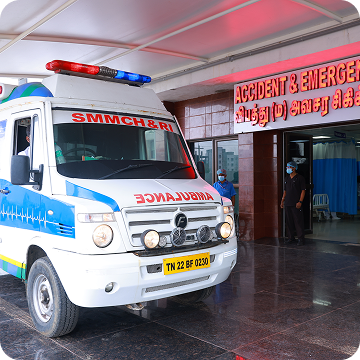
The department also oversees advanced ambulance services for pre-hospital and inter-hospital transfers. These ambulances are equipped with life-support facilities including BiPAP, CPAP, oxygen supply, defibrillators, suction systems, and essential resuscitation equipment—ensuring that critical care begins at the site of the incident and continues seamlessly en route to the hospital.
Emergency and Trauma Procedures
A wide array of emergency and trauma procedures are routinely performed by the department, including:
- Airway management with endotracheal intubation, cricothyroidotomy, and assisted ventilation
- Cardiopulmonary resuscitation, advanced cardiac life support (ACLS), and defibrillation
- Central venous and arterial line placements for hemodynamic monitoring
- Emergency thoracostomy, tracheostomy, and management of difficult airways
- Fluid resuscitation, shock management, and control of external hemorrhage
- Chest tube insertion, needle decompression, and pericardiocentesis
- Trauma care: fracture stabilization, splinting, wound debridement, management of crush injuries and burns
- Polytrauma assessment and coordinated surgical interventions for head, thoracic, abdominal, and extremity injuries
- Management of acute poisonings, envenomation, and medical emergencies including stroke, myocardial infarction, respiratory failure, and sepsis
- Gastric lavage, urinary catheterization, nasogastric intubation, and burn care
The department’s trauma team works in close coordination with General Surgery, Orthopedics, Neurosurgery, Cardiothoracic Surgery, Anesthesiology, and Radiology to deliver integrated trauma management and ensure comprehensive care for all emergency patients.
Team and Coordination
Emergency and Trauma Care functions under a multidisciplinary team of qualified emergency physicians with continuous support from anesthesiologists, surgeons, orthopedic and thoracic medicine specialists. Each member of the team is trained in advanced trauma life support (ATLS) and basic and advanced cardiac life support (BLS/ACLS) protocols.
Regular mock drills, emergency simulations, and protocol-based management training are conducted to ensure readiness for mass casualty incidents and disaster management. Interdepartmental coordination and rapid response mechanisms enable effective handling of high-acuity cases with precision and confidence. With a strong focus on rapid response, evidence-based practice, and patient-centered care, the Department of Emergency and Trauma Care remains the hospital’s cornerstone for delivering immediate, multidisciplinary, and life-saving treatment to those in need.